I signed my name on a NEET mock OMR sheet once and then panicked because I thought I had ruined my only copy. Turns out I had not ruined anything, because the sheet itself is designed with a copy underneath that captures everything I mark on top. Nobody had explained this carbon copy system to me before, and that gap in my understanding almost cost me a full practice attempt.
If you are looking into a NEET mock OMR answer sheet, you are probably deep into your entrance exam preparation right now. I have filled out this exact style of sheet multiple times during my own mock test practice, and I want to walk you through the parts that genuinely confused me at first.
Why This Sheet Feels So Different From a School OMR Sheet
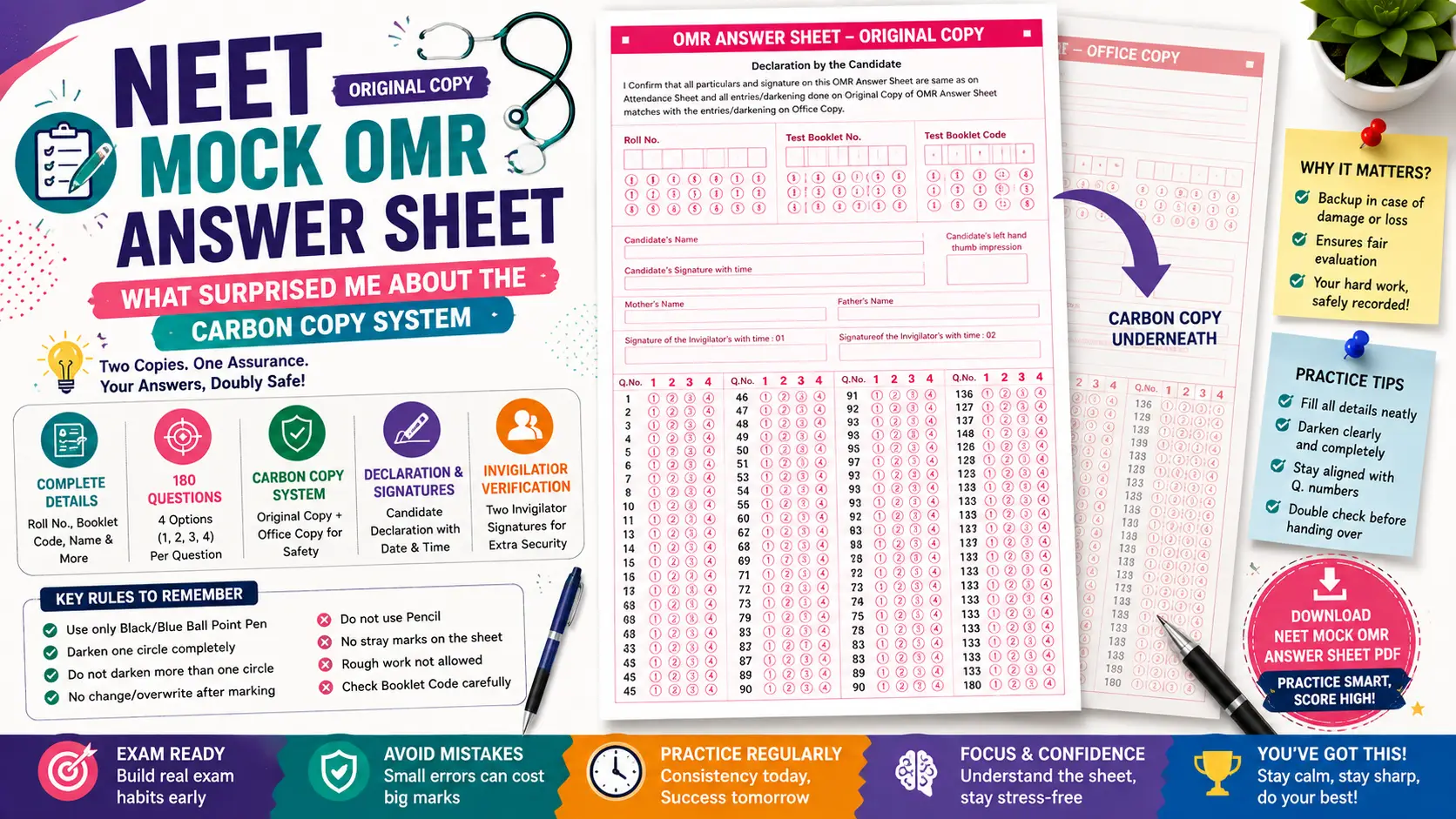
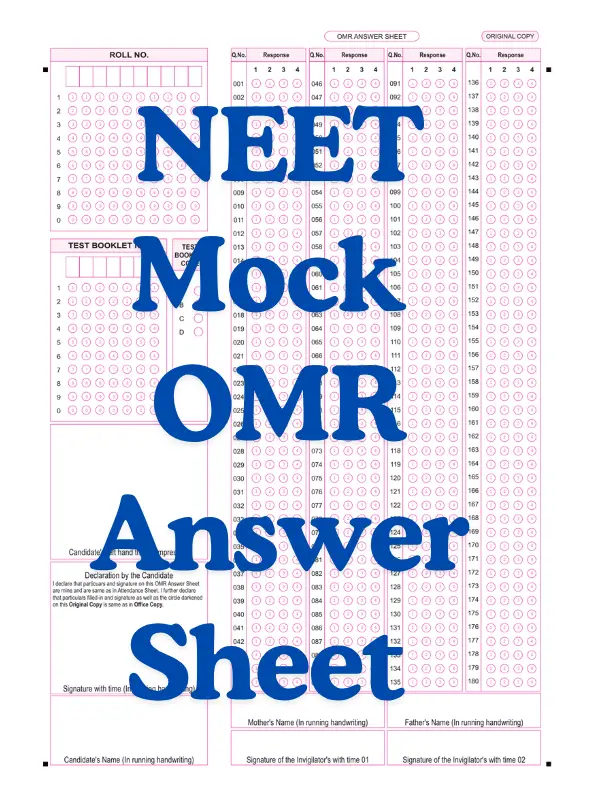
The moment you pick up a real NEET-style OMR sheet, you notice it is nothing like the simple bubble sheets used in regular school tests. This sheet is clearly marked “OMR ANSWER SHEET ORIGINAL COPY” at the top, which was my first clue that a second copy exists somewhere underneath. The layout is dense, with question numbers packed tightly across four columns, each offering four response options.
Instead of the usual A, B, C, D letters, the response options on this sheet are numbered 1, 2, 3, and 4 for every single question. I remember pausing during my first attempt, double-checking the question paper to make sure my option numbering actually matched the sheet. This small difference trips up a lot of students who are used to letter-based options from school exams.
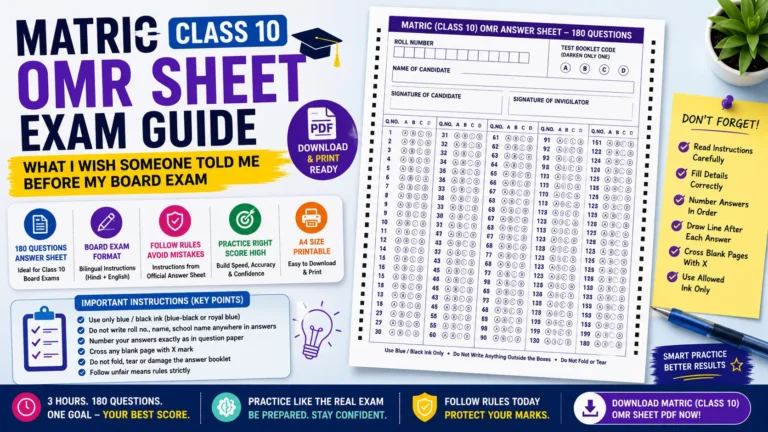
The question numbering itself runs all the way up to 180 questions, split across four columns on the sheet. Each column handles a separate block of question numbers, so you genuinely need to track which column your current question falls into. Losing track of the correct column is an easy mistake to make when you are racing against a strict timer.
The Declaration Section That Actually Matters
Near the top of the sheet, there is a full Declaration by the Candidate section that I almost skipped reading during my first mock attempt. It states clearly that the candidate confirms their particulars and signature on the OMR Answer Sheet match what is on the Attendance Sheet. It further declares that everything filled in and darkened on the Original Copy matches exactly what appears on the Office Copy underneath.
This is where the carbon copy system genuinely makes sense once you understand it properly. Whatever you write and darken on the top sheet, called the Original Copy, gets captured onto a second sheet underneath, called the Office Copy. This exists purely for safety, so if the original sheet ever gets damaged or lost, the examiners still have a verified copy to check your answers against.
Right below the declaration, the sheet asks for a Candidate’s Name written in running handwriting, followed by a Signature with time in running handwriting as well. There is also a specific box for the Candidate’s left hand thumb impression, something I had genuinely never encountered on a regular school-level answer sheet before. This level of identity verification tells you exactly how seriously NEET treats candidate authentication.
Filling in Family Details and Invigilator Sections
Beyond the candidate’s own details, the sheet also asks for the Mother’s Name and Father’s Name, both written in running handwriting in their own dedicated spaces. I remember being surprised by this the first time, since most school-level sheets never ask for parent details at all. This level of detail exists purely to prevent any identity mix-ups during a massive national-level exam with lakhs of candidates.
The sheet also has two separate sections for Signature of the Invigilator’s with time, clearly labeled as 01 and 02. This means two different invigilators are expected to sign and verify your sheet during the actual exam, not just one. Practicing with a mock sheet that includes this exact structure helped me understand how much verification actually happens before your OMR sheet gets accepted for evaluation.
Step-by-Step: How I Practice With a NEET-Style Mock Sheet
After my confusing first attempt, I built a fixed routine for practicing with this exact sheet format, and I follow it every single time now.
- I fill my Roll No and Test Booklet No first, matching them exactly to what is printed on my actual mock question paper.
- I check the Test Booklet Code box carefully, since this needs to match the code printed on the top of my question booklet.
- I write my Candidate’s Name and sign with the time, both in clear running handwriting, treating it exactly like the real exam.
- I fill in Mother’s Name and Father’s Name in their designated boxes, even during a mock attempt, to build the habit early.
- I attempt each question on a rough sheet first, then mark my final answer using the numbered 1, 2, 3, 4 options on the OMR sheet.
- I check my current column every ten questions, since 180 questions split across four columns makes it easy to lose your place.
- Once finished, I compare my marked answers against the answer key, separating content mistakes from marking mistakes in a notebook.
Following this exact order stopped me from jumping around the sheet randomly, which used to be where most of my careless errors happened.
A Mistake I Made During Practice
During one mock round, I started marking my answers in the wrong column entirely, since I had accidentally skipped from question 45 straight into the second column meant for question 91 onward. I did not catch this until nearly twenty questions later, and fixing it meant carefully rechecking every single answer in that stretch. This single mistake taught me to always glance at the printed question number range at the top of each column before marking any answer.
Another time, I pressed too hard while darkening a response bubble and the mark bled slightly onto the row below it. Since this sheet uses a carbon copy underneath, any messy or uneven pressure can actually affect how clearly your answer transfers onto the Office Copy. I learned to use steady, even pressure instead of aggressively scrubbing the bubble dark, which actually gave cleaner results on both copies.
Real Example: Why the Format Number Matters
A friend of mine preparing for NEET once used a mock sheet with A, B, C, D lettered options because that is what her coaching institute initially handed out. When she finally practiced with an actual NEET-style sheet using 1, 2, 3, 4 numbered options, she said it genuinely felt unfamiliar for the first few questions. Switching her practice material to match the real numbered format made a noticeable difference in her comfort level closer to her actual exam date.
This is exactly why I always recommend practicing with a sheet that matches the real NEET format as closely as possible, right down to the numbered options and the four-column layout. Small formatting differences that seem minor during practice can genuinely throw off your rhythm during the actual high-pressure exam.
Common Mistakes to Avoid
Based on my own mock attempts and what I have noticed among fellow NEET aspirants, these mistakes come up repeatedly with this specific sheet format.
- Confusing the numbered 1, 2, 3, 4 response options with the lettered A, B, C, D format used in some other exams.
- Losing track of the correct column among the four columns spread across 180 questions.
- Applying uneven or excessive pressure while darkening bubbles, which affects the carbon copy underneath.
- Skipping the Mother’s Name and Father’s Name fields during practice, then fumbling with them on the actual exam day.
- Forgetting to check the Test Booklet Code against the actual question booklet before starting to answer.
- Rushing through the Declaration and signature sections instead of treating them as seriously as the answers themselves.
Fixing even a few of these habits early through regular mock practice genuinely builds the confidence needed for exam day.
Final Thoughts
A NEET mock OMR answer sheet is built with a level of detail and verification that goes far beyond a typical school answer sheet, and understanding this structure properly makes a real difference. I only understood the carbon copy system and the full declaration process after going through several confusing practice rounds myself. Once you know exactly what each section expects, filling this sheet stops feeling intimidating and starts feeling routine.
Practice with a proper NEET-style mock OMR sheet regularly, paying close attention to the numbered options, the four-column layout, and every identity verification field. By the time your actual NEET exam day arrives, filling this sheet correctly will feel completely automatic, leaving your full focus on the questions that truly decide your rank.