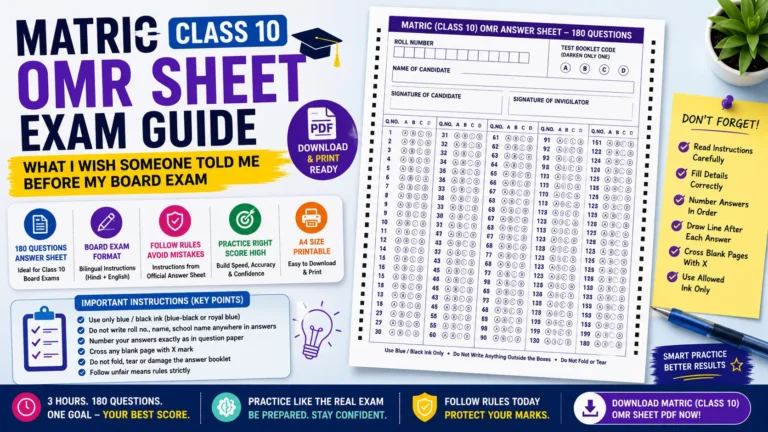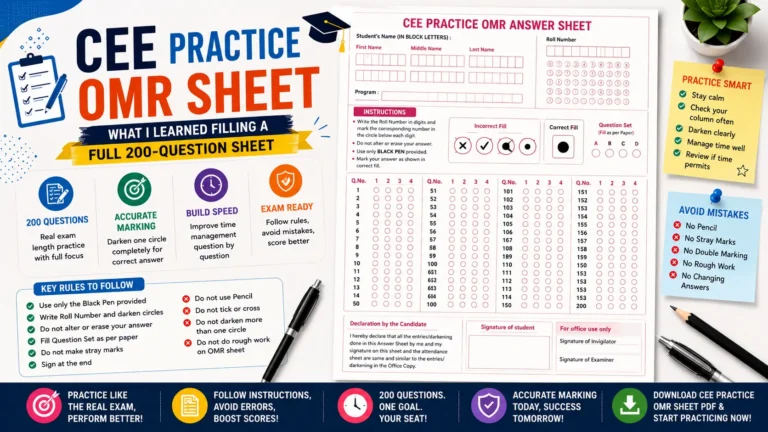
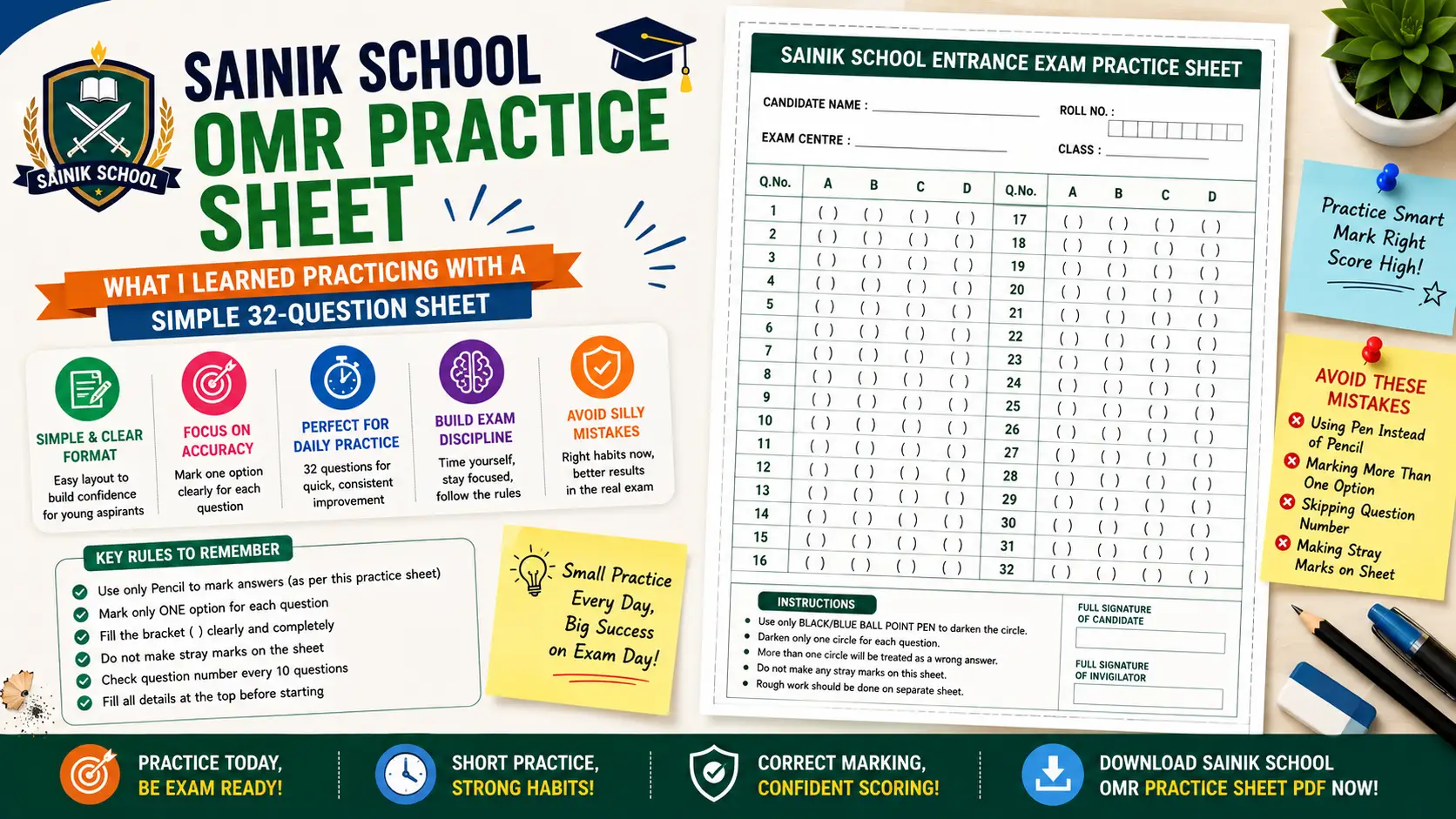
My nephew handed me his practice sheet last month and asked why the answer boxes looked like plain brackets instead of the dark circles he saw in his cousin’s NEET book. That one question turned into a whole afternoon of me explaining how a Sainik School OMR practice sheet actually works, and why its simple design is exactly the point.
If you are searching for a Sainik School OMR practice sheet, you are probably helping a child prepare for the AISSEE entrance exam, or maybe you are the student yourself. I sat down with my nephew through several practice rounds using this exact format, and I want to share what actually helped him improve.
Why This Sheet Looks So Basic Compared to Others
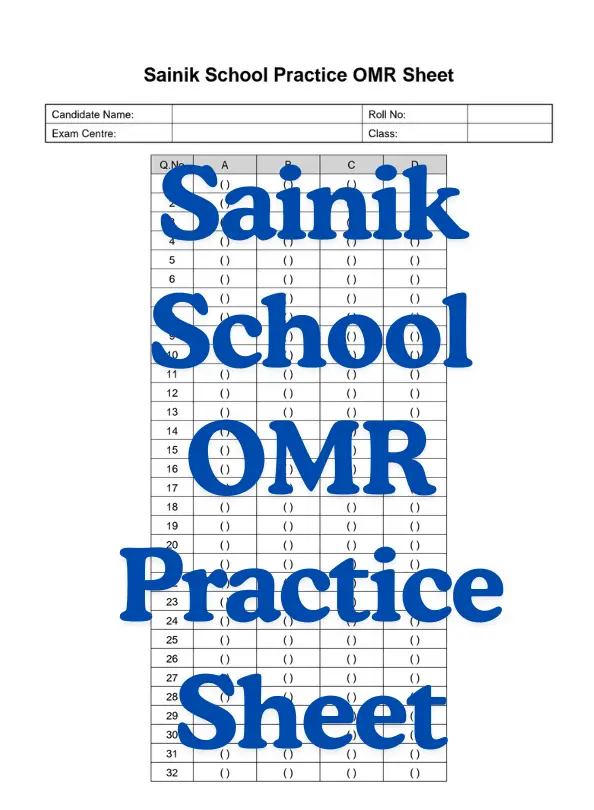
The first thing you notice about a Sainik School practice sheet is how clean and uncluttered it looks. There is a simple header with Candidate Name and Roll No fields side by side, followed by Exam Centre and Class fields right below them. No bilingual instruction blocks, no barcode strips, no dense grid of digit circles like you see on bigger board exam sheets.
Below the header, the sheet moves straight into the question table. Each row has a Q.No column on the left, followed by four columns marked A, B, C, and D, with an empty bracket symbol inside each one. This bracket format, written as ( ), is different from the solid circle bubbles most students expect from a typical OMR sheet.
I actually like this simpler design for younger students preparing for Sainik School entrance exams, usually Class 6 and Class 9 aspirants. It keeps their focus purely on picking the right option without worrying about tightly packed bubble grids or complicated code numbers. For a first-time OMR user, this format genuinely eases the intimidation factor.
What My Nephew Got Wrong the First Time
During his very first practice attempt, my nephew filled in the brackets by putting a small dot in the middle of each one, exactly like he had seen in a school worksheet before. When I checked his sheet, half the marks were barely visible because he was too gentle with his pencil. A real scanner, or even a human checking against an answer key, needs a clear, complete mark inside that bracket space.
I explained to him that the bracket in a Sainik School OMR practice sheet still needs to be filled or marked clearly, just like a bubble on any other OMR sheet. The shape is different, but the purpose is exactly the same. Once he understood this, he started drawing a solid tick or a filled dot with visible pressure, and his second attempt looked completely different.
Another mistake he made was marking two options for the same question because he genuinely could not decide between two answers during a rushed practice round. This sheet does not have any built-in warning symbol like some board exam sheets do, so it is entirely on the student to remember the one-answer rule. I told him to treat every single question like it only allows one final decision, no matter how unsure he felt in the moment.
Step-by-Step: How We Practice With This Sheet Now
After that first messy attempt, we built a simple routine together, and it made a noticeable difference within just a few weekends.
- We start by filling the Candidate Name, Roll No, Exam Centre, and Class fields at the top, treating it exactly like a real exam form.
- We set a timer based on the actual AISSEE exam pattern, giving roughly equal time per question across the full paper.
- My nephew solves each question on a separate rough sheet first, deciding on his final answer before touching the OMR sheet.
- He marks the bracket for his chosen option with a clear, solid pencil mark, checking that only one option per question is filled.
- Every ten questions, he pauses briefly and checks that his question numbers on the sheet match the actual question paper.
- Once finished, we compare his answers against the answer key and note down every mistake in a small notebook.
- We separate his mistakes into two types, ones from not knowing the answer and ones from careless marking, so we know exactly what to fix.
This routine turned a confusing first attempt into something my nephew now does almost automatically every weekend. The simple 32-question format on this particular sheet makes it easy to complete a full practice round without feeling exhausted halfway through, unlike some longer sheets.
Real Example: Building Speed With a Small Sheet
Since this practice sheet only covers 32 questions, it works really well as a quick daily drill rather than a full three-hour mock test. My nephew uses it almost like a warm-up exercise before moving on to longer, timed practice papers closer to his actual exam date. This smaller size means he can complete an entire sheet in fifteen to twenty minutes, which fits easily into a busy school day.
I have noticed that shorter, focused practice sessions like this actually build more consistent habits than occasional long mock tests. He does not get tired or lose focus halfway through a 32-question sheet, so every single mark he makes reflects his actual decision, not fatigue-driven guessing. This makes it a genuinely useful tool for younger students who are still building their basic OMR filling habits.
Common Mistakes to Avoid
Based on what I watched my nephew go through, and what other parents in our building mentioned about their own kids, these mistakes come up again and again with simpler practice sheets like this one.
- Making light, barely visible marks inside the bracket instead of a clear, solid pencil mark.
- Marking more than one option for the same question when unsure, instead of committing to one final answer.
- Losing track of the question number row, especially when skipping a tricky question and coming back later.
- Treating the practice sheet casually, without setting a timer, which does not build real exam-day speed.
- Ignoring the header fields like Roll No, Exam Centre, and Class, which are actually good habits to practice early.
Fixing even two or three of these small habits early made a real difference in how confidently my nephew approached his later, longer mock tests.
Why Practicing the Basics Actually Matters
It is tempting to think a simple 32-question sheet with plain bracket symbols is not worth much practice time. But for a young student preparing for their very first big entrance exam, this sheet builds the exact same core habits that longer, more complex sheets require later. Marking clearly, checking question numbers, and sticking to one final answer are skills that carry over directly to the real AISSEE exam hall.
I have genuinely seen the difference in my nephew’s confidence after a few weeks of using this sheet regularly. He no longer hesitates or second-guesses how to fill an answer, which means he can spend his mental energy actually solving the questions instead. That shift alone made every single practice round worth the fifteen minutes it took.
Final Thoughts
A Sainik School OMR practice sheet might look plain compared to bigger board exam formats, but its simplicity is genuinely useful for building strong basic habits early. I learned this firsthand watching my nephew go from barely visible pencil dots to confident, clear marks within just a few weekends of practice. The format may be simple, but the discipline it teaches carries over to every bigger exam a student will face later.
Print a proper Sainik School OMR practice sheet, set a short timer, and treat every attempt like a real exam moment, even for something as small as 32 questions. That small daily habit builds the exact confidence a young student needs before walking into their actual Sainik School entrance exam.