I still remember the exact moment my heart dropped during a crucial mock exam. I had exactly twelve minutes left on the clock. I had solved the questions in my head, but my answer sheet was almost completely blank. I started frantically darkening bubbles, my hand shaking, trying to transfer forty answers at once.
I skipped a line.
By the time I realized my mistake, the invigilator was already collecting the papers. That single, stupid bubbling error cost me a rank that could have changed my college admission. It was a harsh lesson, but it taught me something vital: knowing the answers is only half the battle. Knowing how to transfer them to a 180 Questions OMR Sheet PDF accurately under pressure is the other half.
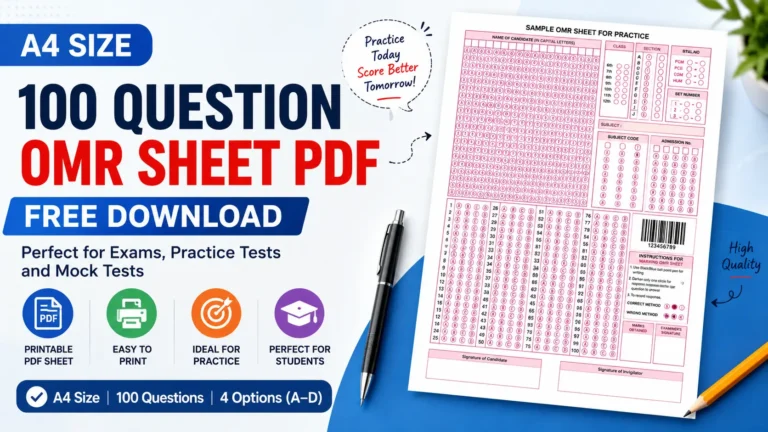
If you are preparing for NEET, state medical entrance exams, or any major test with a similar pattern, you already know the drill. Physics, Chemistry, and Biology sections add up to exactly 180 questions. Practicing on a standard 100-question sheet just does not cut it. You need to build the specific stamina and muscle memory required for the real deal.
Let me walk you through how I fixed my strategy, how you can set up your own realistic mock tests at home, and the exact mistakes you need to avoid to protect your hard-earned marks.
Why the 180-Question Format is a Different Beast
A 180-question exam is a marathon, not a sprint. It usually takes three full hours to complete. When you practice on loose, unformatted paper or a digital app, you miss out on the physical reality of the exam hall.
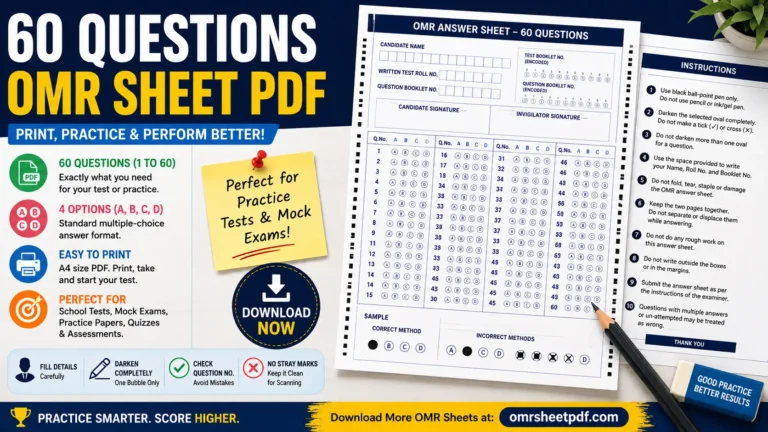
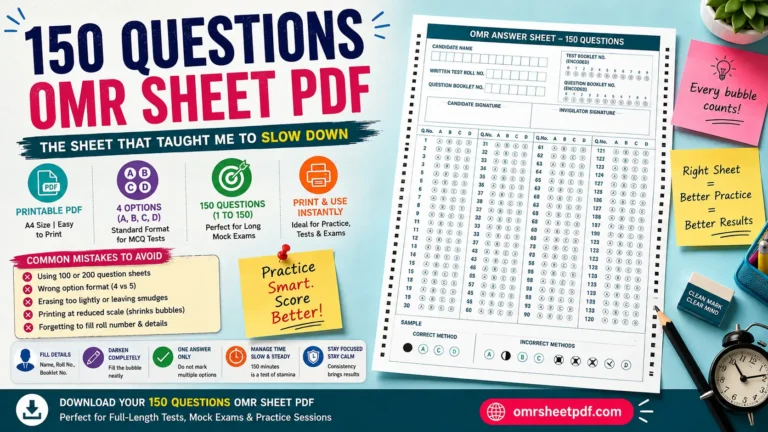
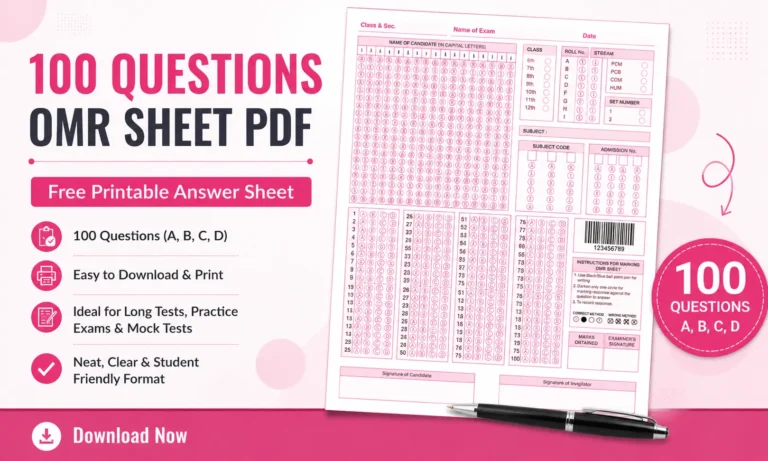
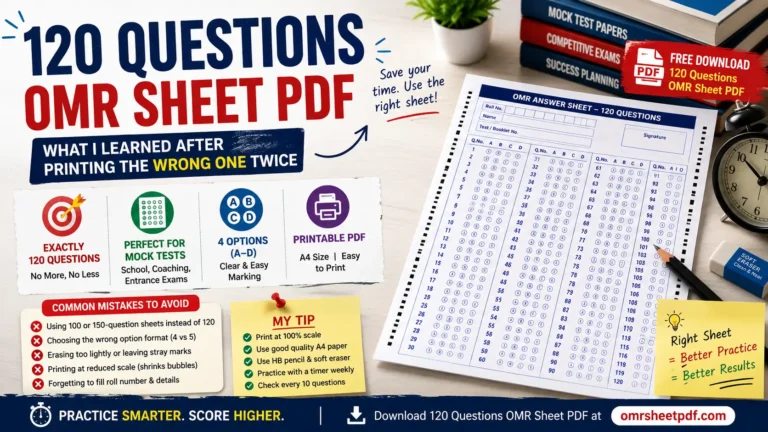
Printing out a dedicated 180 Questions OMR Sheet PDF changes your entire mindset. You get used to the physical layout. You learn how much space you have for rough work. You realize how your hand starts to cramp around the two-hour mark.
I started using a printed 180-question sheet for every single weekend mock test. Within a month, my bubbling speed doubled. I stopped second-guessing my alignment. The sheet became a familiar friend rather than a source of anxiety.
My Personal Bubbling Strategy (And How I Fixed My Mistakes)
After my disastrous mock test, I knew I had to change my approach. I experimented with a few different methods before finding the one that actually worked.
At first, I tried bubbling after every single question. This broke my concentration. I would read a question, solve it, look down, bubble it, and lose my train of thought. It added precious seconds to every question, which added up to twenty wasted minutes by the end of the paper.
Then, I tried bubbling everything at the end. We already know how that ended.
The winning strategy? Subject-by-subject bubbling.
I would solve all of Physics, then immediately transfer those 45 answers to the OMR sheet. Then I would move to Chemistry, solve it, and bubble it. Finally, Biology. This gave my brain a micro-break during the transfer process. It also ensured that if I ran out of time, I at least had the answers for the sections I had already finished safely recorded.
Step-by-Step: How to Set Up a Realistic Mock Test at Home
You do not need a fancy coaching center to simulate exam conditions. You can do it right at your dining table. Here is exactly how I set up my practice sessions using a printable OMR sheet.
Step 1: Download the Right File
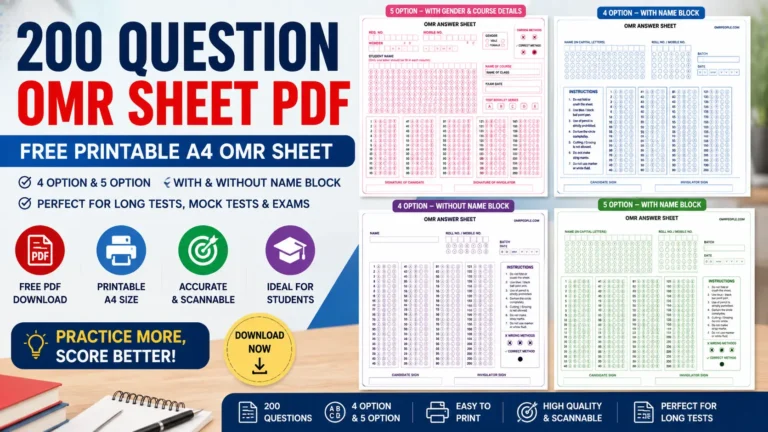
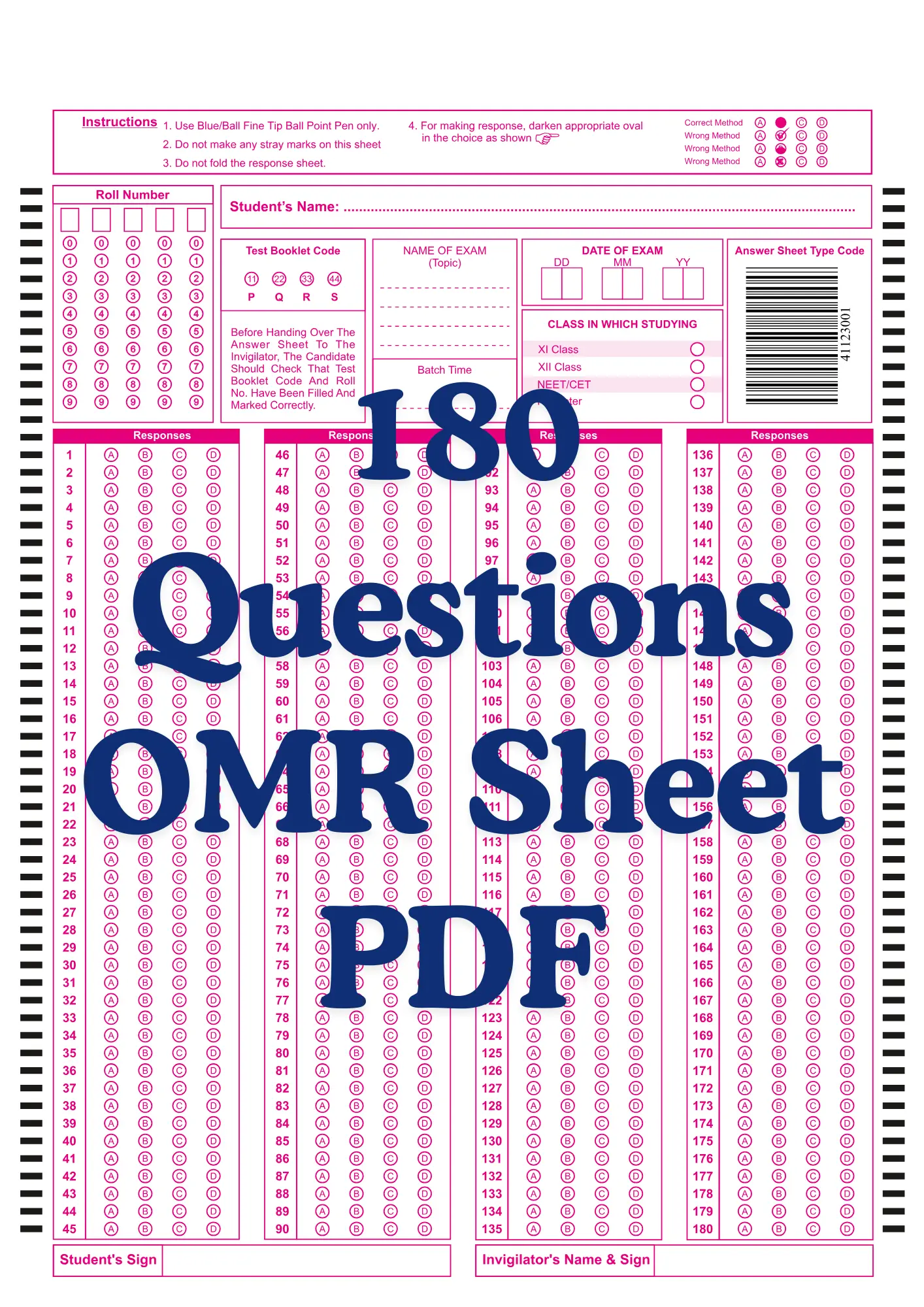
Head over to a reliable resource and download a high-quality 180 Questions OMR Sheet PDF. Make sure it includes sections for your roll number, test booklet code, and subject-wise divisions.
Step 2: Print It Correctly
This is where most students mess up. Open the PDF in a viewer like Adobe Acrobat Reader. Go to print settings. Crucially, set the page scaling to “Actual Size” or “100%”. Do not let your printer “Fit to Page.” If the bubbles shrink, your pencil marks might bleed outside the lines, which can confuse a scanner. Use clean, bright white A4 paper.
Step 3: Gather Your Tools
Keep it authentic. Use a sharp HB pencil (I personally swear by the Apsara Platinum or Natraj 621). Have a good quality eraser ready. Set a physical timer or use a focus app like “Forest” on your phone, and put the phone in another room.
Step 4: Execute the Test
Sit at a clean desk. Fill in your fake roll number and booklet code first, just like you would in the real exam. Start the timer. Stick to your chosen bubbling strategy. When the timer hits zero, stop immediately.
Who Actually Benefits from This Specific Sheet?
While NEET aspirants are the most obvious users, this format is incredibly versatile.
Coaching teachers and school tutors use these printable sheets to create custom, high-quality mock tests for their students without spending hours designing bubble grids from scratch in Word.
Parents also find them highly useful. If you are homeschooling or just want to help your child prepare for a big board exam, printing a 180-question sheet and acting as the strict invigilator at home builds incredible discipline in young students.
5 Deadly Mistakes to Avoid on Your OMR Sheet
I have graded practice tests and seen students sabotage their own scores. Do not let these common errors happen to you.
1. The Dreaded “Line Shift”
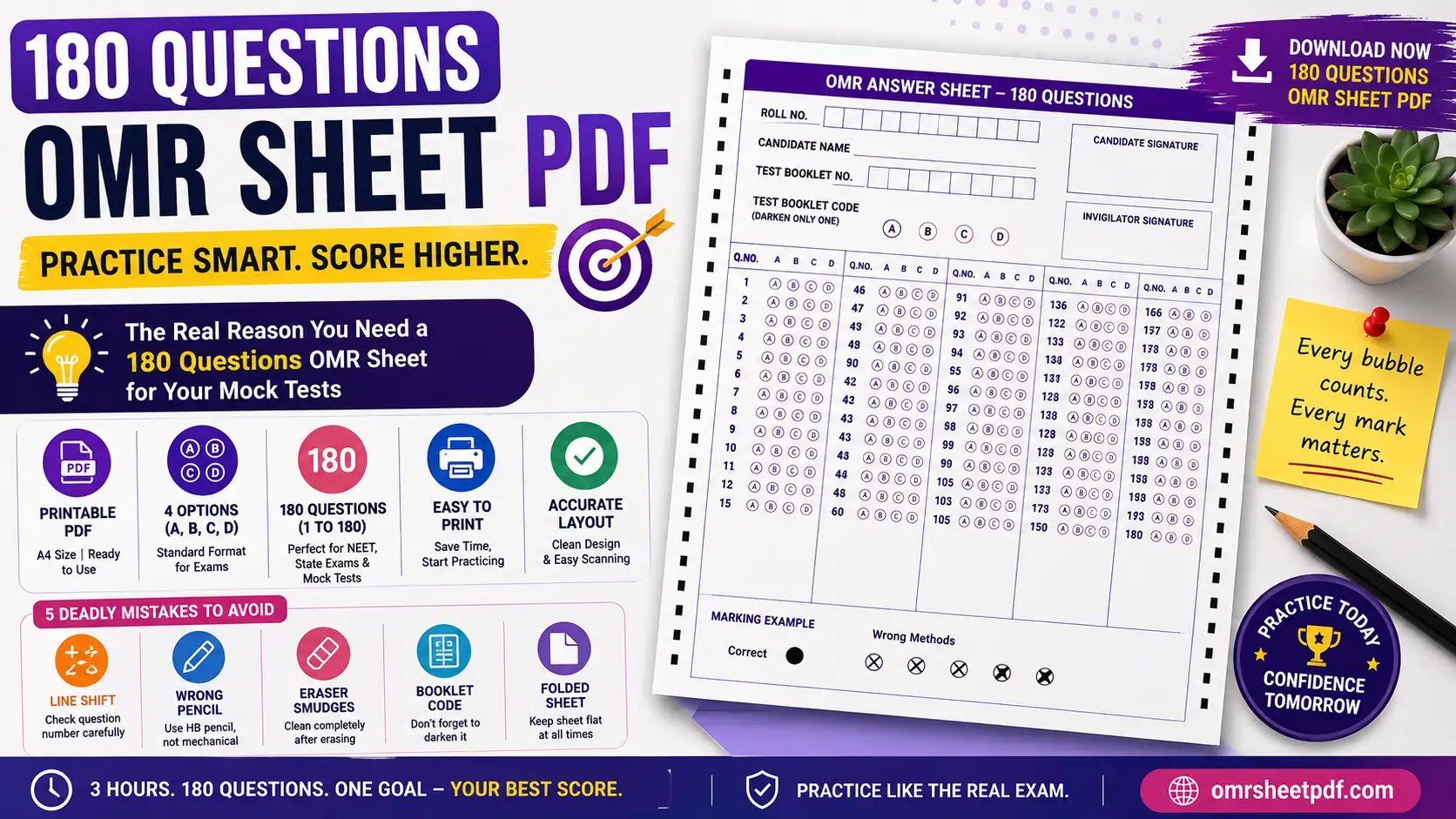
This is the most common and painful mistake. You skip question 42 on the test paper, but you bubble the answer for 42 into the slot for 43 on the OMR sheet. From that point on, every single answer is wrong. Fix: Check your question number against the OMR row number every ten questions.
2. Using the Wrong Pencil
Do not use a mechanical pencil with a super fine tip (like 0.5mm). The mark is often too light for older scanning machines to read reliably. Stick to a standard, dark HB wooden pencil.
3. The Eraser Smudge Disaster
When you change an answer, you erase the old bubble. But if you leave graphite dust behind, the scanner might read it as a “double bubble” and mark the question wrong. Fix: Use a kneaded eraser or gently blow the dust away completely before moving on.
4. Forgetting the Booklet Code
You can get every single answer right, but if you forget to darken the circle for your specific test booklet series (A, B, C, or D), the answer key will be applied incorrectly, and you will score a zero. Always fill this out first.
5. Folding the Corners
It is tempting to fold the corner of the paper to keep your place or mark a question for review. Do not do this. High-speed scanners pull the paper through tight rollers. A folded corner can jam the machine and tear your only answer sheet. Keep it perfectly flat.
A Quick Note on Physical Booklets vs. Printing
If you take more than two full-length mock tests a week, printing at home gets expensive and wasteful. Ink is pricey, and loose A4 sheets easily get crumpled in a backpack.
If that sounds like you, consider investing in a spiral-bound OMR practice booklet. You can find great options on Amazon from brands like Bungbee or PaperPilot. They come with 50 to 100 pre-printed, high-quality sheets bound together like a notebook. You can tear out the sheet you need for the day, and the rest stay protected. It is a small investment that saves a lot of headache.
Final Thoughts
Mastering a 180-question exam is about more than just academic knowledge. It is about logistics, time management, and physical endurance.
Do not wait until the week before your actual exam to figure out how to use an OMR sheet. Download a 180 Questions OMR Sheet PDF today. Print it out. Sit down with a pencil and a timer. Make your mistakes now, in the safety of your own home, so you do not make them when it actually counts.
You have put in the hard work to learn the material. Do not let a silly bubbling error steal your success. Get your sheet, practice your strategy, and walk into that exam hall with absolute confidence. You have got this.