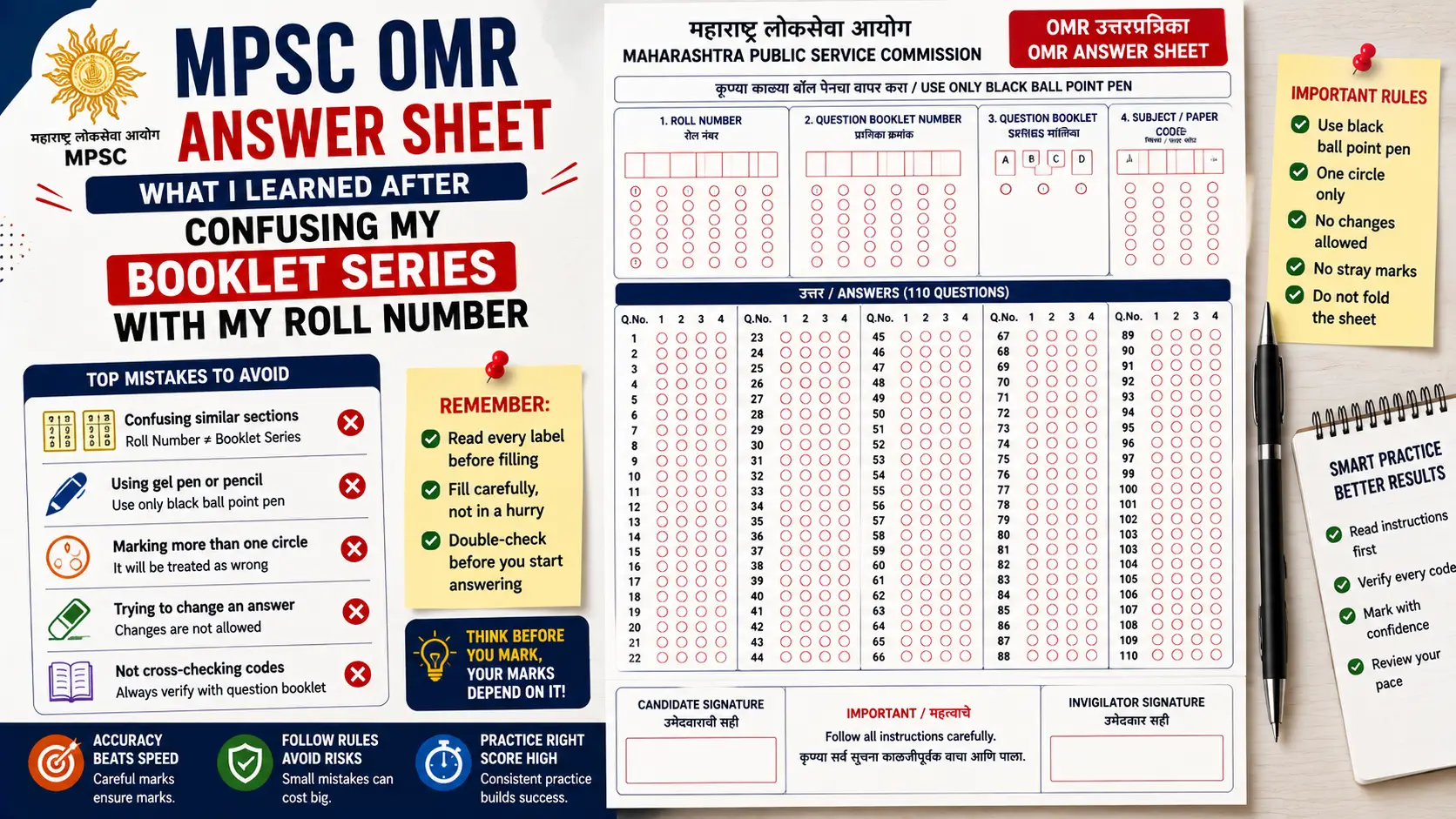
I once spent almost five minutes staring at two nearly identical looking code boxes on my MPSC OMR Sheet: What I Learned After Confusing My Booklet Series With My Roll Number mock sheet, genuinely unsure which one was my Roll Number and which one was my Question Booklet Series. That confusion happened during a timed practice session, and those five wasted minutes taught me more about reading an OMR sheet carefully than any coaching class lecture ever did.
If you are preparing for MPSC, the Maharashtra Public Service Commission exams, and want to understand how the actual OMR answer sheet works, I have filled out this exact format multiple times during my own practice rounds. I want to walk you through what genuinely helped me, along with the mistakes that taught me to slow down.
Why the MPSC OMR Sheet Demands Extra Attention
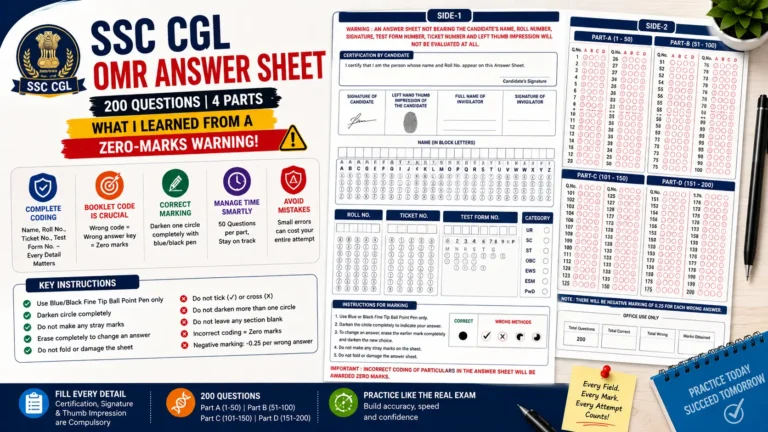
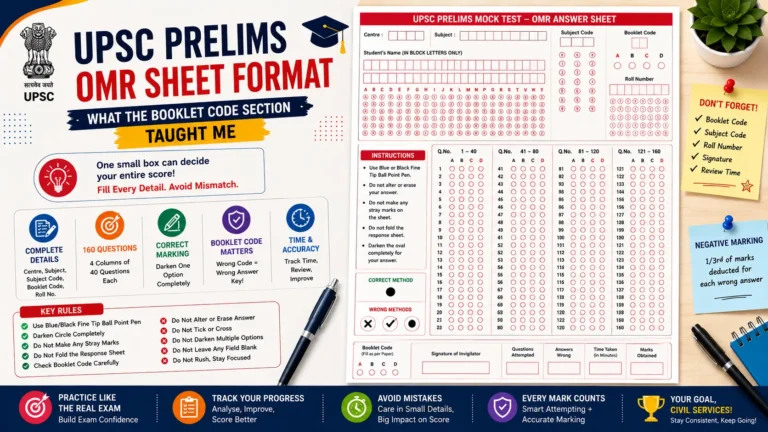
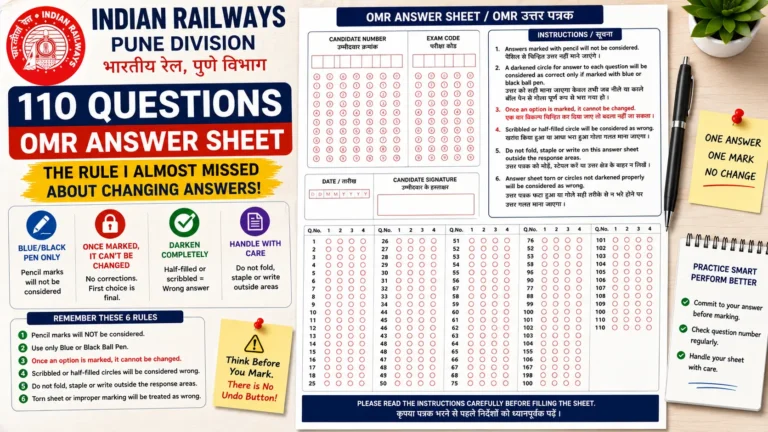
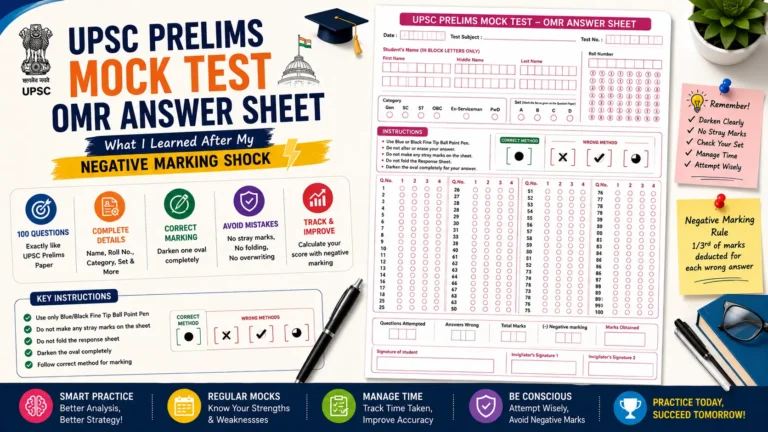
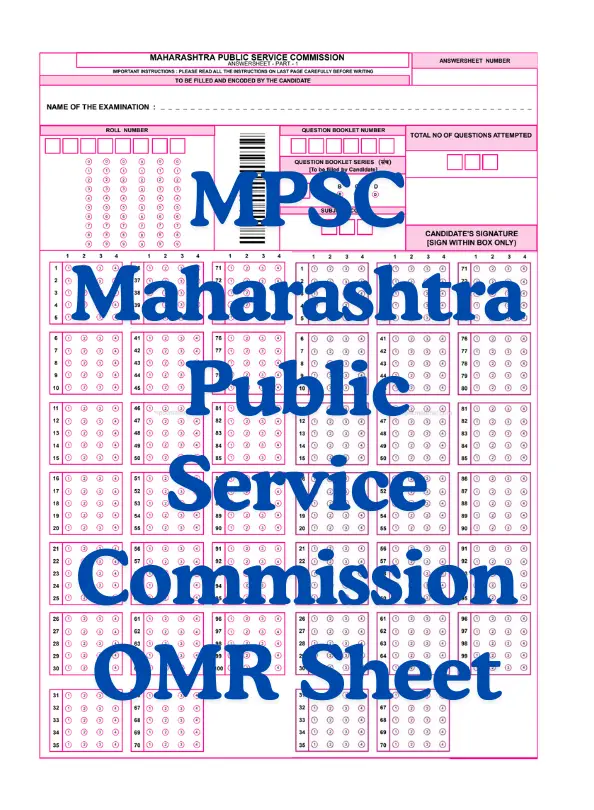
MPSC exams cover a huge range of posts, from State Services to various group-level recruitment exams, and most of these use a fairly detailed OMR answer sheet format. Unlike a simple practice bubble sheet, the actual MPSC sheet carries several coded sections at the top, including your Roll Number, Question Booklet Number, Question Booklet Series, and often a Subject or Paper code as well. Each of these uses its own grid of digit boxes with matching circles underneath, similar to how a bank passbook number gets coded on some government forms.
I remember my first attempt at a full-length MPSC mock test, and I genuinely underestimated how much time the header section alone would take if done carefully. Between the Roll Number, Booklet Number, and Series code, there were four separate coded sections before I even reached question number one. Rushing through any of these risks a mismatch during actual evaluation, which is exactly why MPSC candidates are advised to double check every single digit before moving on.
The Booklet Series Confusion That Cost Me Time
The mistake I mentioned earlier, mixing up my Roll Number box with my Question Booklet Series box, happened because both sections use similar looking digit grids sitting close together on the page. The Booklet Series usually appears as a single letter, like A, B, C, or D, printed on your actual question paper, and you need to match this exact letter on your OMR sheet. My Roll Number, on the other hand, is a multi-digit number specific to me as a candidate, completely unrelated to which version of the paper I received.
Once I understood the actual difference between these two sections, I built a habit of reading the printed label above each grid slowly before filling anything in. This sounds like an obvious step, but under exam pressure, it is surprisingly easy to glance at a grid of boxes and just start filling digits without confirming which section you are actually looking at.
Understanding the Marking Rules MPSC Actually Follows
Most MPSC OMR sheets require you to use a black ball point pen specifically, since pencil marks are generally not accepted for evaluation in most government exam formats across Maharashtra. I made the mistake of bringing only a gel pen to one of my early mock sessions, assuming any black ink would work fine. A friend preparing alongside me pointed out that a proper ball point pen gives a cleaner, more consistent dark mark compared to a gel pen, which can sometimes create uneven or streaky circles that scanners struggle to read accurately.
Like most competitive exam sheets, MPSC also strictly prohibits marking more than one circle for a single question, treating any such attempt as an invalid or wrong response. Changing an answer once marked is generally not permitted either, which means every single response needs to be a final, confident decision rather than a first guess you plan to fix later. This single rule shaped how I approached practice sessions going forward, since I stopped treating my first mark as a rough draft.
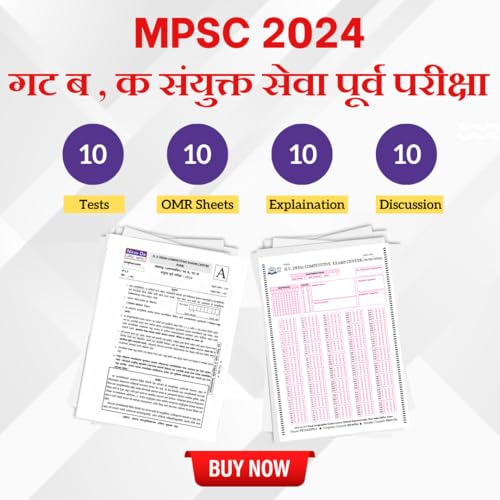
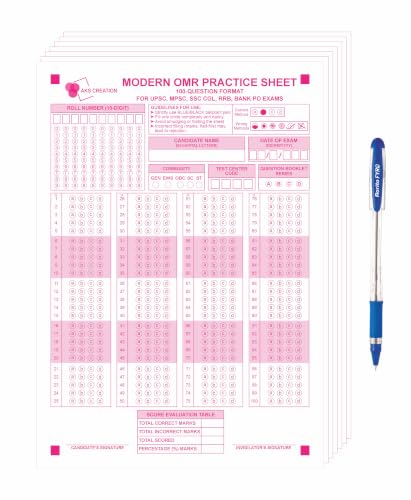
Step-by-Step: How I Practice With an MPSC-Style OMR Sheet Now
After my booklet series mix-up, I built a fixed routine for filling this sheet, and I follow the exact same order for every single mock attempt now.
- I pick up only a black ball point pen before starting, keeping any pencil or gel pen completely out of reach.
- I read the printed label above each coded section slowly, confirming exactly which grid represents Roll Number versus Booklet Series or Number.
- I fill in my Roll Number digits first, carefully darkening the matching circle below each individual number.
- I check my Question Booklet Number and Series against my actual mock question paper, matching each digit and letter precisely.
- I fill in any Subject or Paper code section, again cross-checking it against my question booklet before marking anything.
- I solve each question fully on rough paper first, committing to my final answer before touching the actual OMR sheet.
- I darken exactly one complete circle per question, treating every mark as final since changes are generally not accepted.
- Every twenty-five questions or so, I glance at the question number printed beside each row to make sure I have not drifted off track.
This exact order stopped me from rushing carelessly through the header section, which is honestly where my earlier confusion happened in the first place.
Real Example: Why Cross-Checking Codes Actually Matters
A colleague of mine preparing for an MPSC group-level exam once shared how she nearly submitted her mock sheet with an incorrect Booklet Series marked, simply because she had memorized the wrong letter from glancing quickly at her question paper cover. She caught the mistake only because she made a habit of doing one final cross-check of every coded section right before finishing her mock attempt. That small habit, built specifically around MPSC’s coded sections, has stuck with her through months of regular practice since then.
I picked up this exact final cross-check habit after hearing her story, and it genuinely gives me peace of mind before submitting any mock sheet. Spending an extra thirty seconds confirming every code section feels tiny compared to the risk of an entire mismatched paper during a real exam.
Common Mistakes to Avoid
Based on my own practice experience and what I have noticed among fellow MPSC aspirants, these mistakes come up repeatedly with this specific sheet format.
- Confusing similar looking coded sections, like Roll Number and Question Booklet Series, especially under timed exam pressure.
- Using a gel pen instead of a proper black ball point pen, which can create uneven or unclear marks on the sheet.
- Marking more than one circle for a single question, which most MPSC sheets treat as an invalid response.
- Attempting to change an answer after marking it, instead of committing to a final decision beforehand.
- Rushing through the header section without cross-checking codes against your actual question booklet.
- Losing track of your question number across a long paper, especially past the hundred-question mark.
Catching even a couple of these mistakes early during your own mock practice genuinely reduces the risk of losing marks over avoidable, careless errors.
Final Thoughts
The MPSC OMR sheet carries more coded detail than a simple practice bubble sheet, and understanding every section properly makes a real difference to your preparation. I only understood how easily similar looking sections can get confused after wasting real time mixing up my own Roll Number and Booklet Series during a mock attempt. Once you build the habit of reading every label carefully before marking anything, this sheet stops feeling confusing and starts feeling completely manageable.
Practice with a proper MPSC-style OMR sheet regularly, using only a black ball point pen and cross-checking every coded section against your actual question paper. By the time your real MPSC exam day arrives, filling this sheet correctly and confidently will feel completely automatic, leaving your full focus on the questions that truly decide your result.