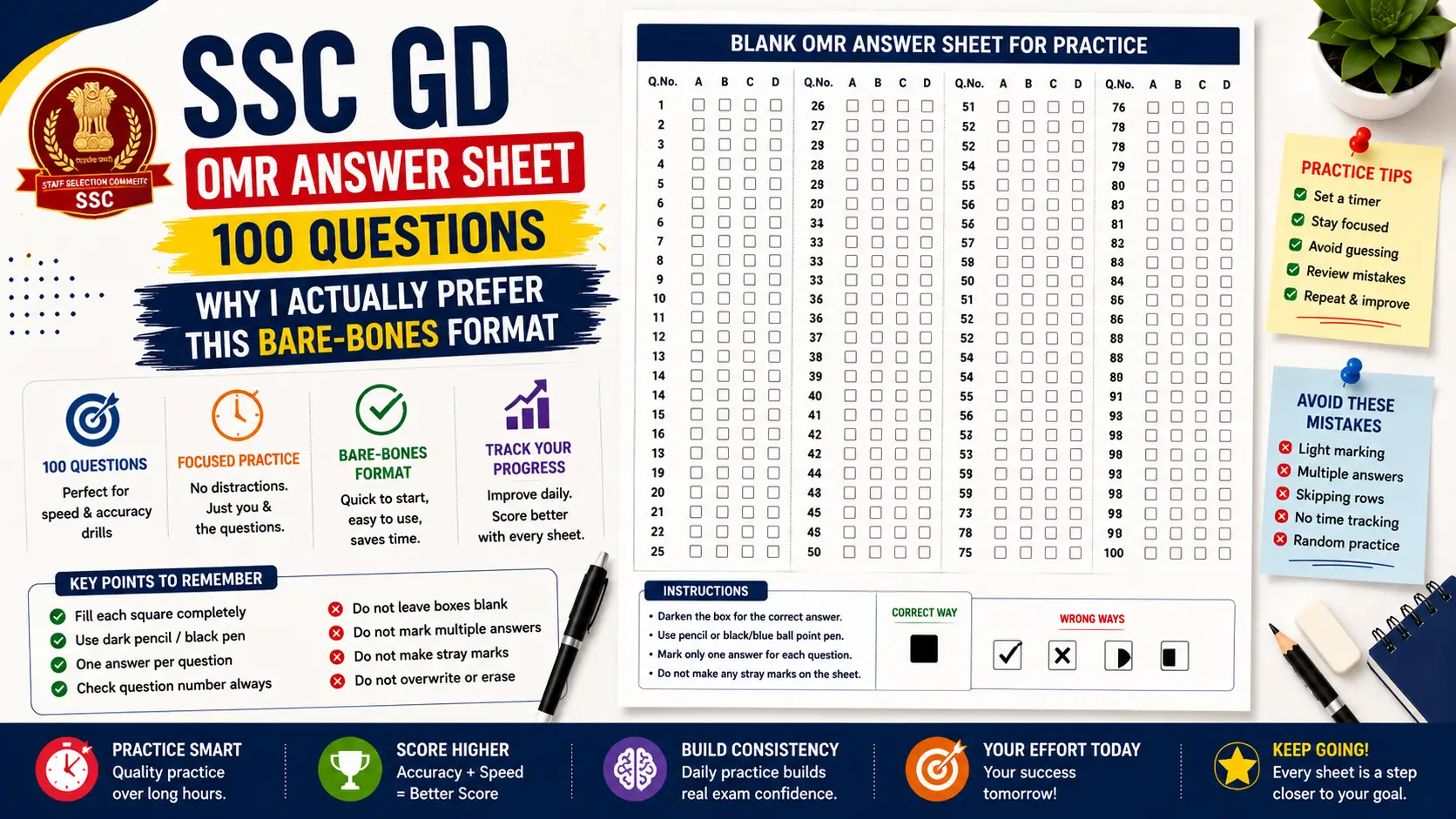
SSC GD OMR answer sheet with 100 questions, explained with practice tips, square-marker filling technique, and common mistakes to avoid.
I printed this sheet expecting the usual mess of name grids, roll number boxes, and coding instructions I had gotten used to with other exam sheets. Instead, I got a single clean column of 100 questions with nothing else on the page at all. My first reaction was honestly confusion, followed almost immediately by relief once I understood exactly why this simpler format actually works so well for daily practice.
If you are preparing for SSC GD and looking for a proper OMR answer sheet to drill with, this stripped-down 100-question format is exactly what most aspirants end up using for regular practice. I have used this exact sheet dozens of times over the past few months, and I want to share what makes it genuinely useful, along with a few mistakes I made along the way.
Why This Sheet Looks So Different From Other Exam Formats
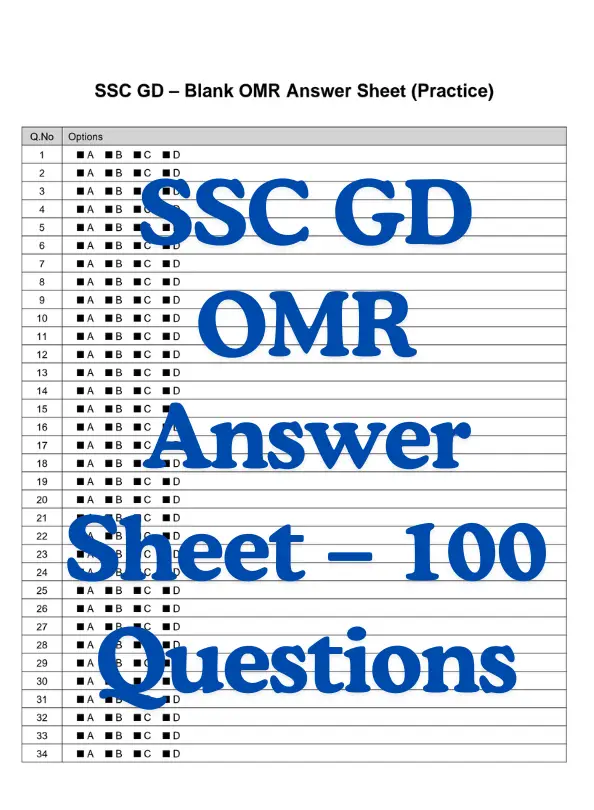
Unlike the detailed board exam or UPSC-style sheets I have used before, this SSC GD practice sheet keeps things extremely simple. It is labeled directly at the top as a Blank OMR Answer Sheet for Practice, and it genuinely delivers exactly that, nothing more and nothing less. There is a single Q.No column running from 1 all the way to 100, with four options, A, B, C, and D, sitting right next to each question number.
What caught my attention immediately is that each option uses a small square marker instead of the usual round bubble I was used to filling on other sheets. I remember hesitating during my first attempt, unsure whether I should still darken the entire square completely or just place a tick mark inside it. This small design difference matters more than it seems, since your marking habit needs to match whatever symbol the actual sheet uses.
Why I Actually Like This Simpler Design for Daily Practice
At first, I genuinely missed having header fields like Name, Roll Number, or Test Form details on this sheet. But after using it regularly, I realized this simplicity is exactly what makes it useful as a fast, no-fuss daily drilling tool. I do not need to fill out five minutes of header information every single time I just want to practice speed and accuracy on 100 straight questions.
This format works especially well when I am not doing a full timed mock test, but simply want to practice a set of 100 questions from a specific topic, like reasoning or general awareness. Since there is nothing else to fill in, I can jump straight from opening the sheet to marking my first answer within seconds. For SSC GD preparation specifically, where speed across a large volume of questions matters a lot, this kind of quick-start format genuinely saves practice time.
A Mistake I Made With the Square Markers
During my first few attempts, I filled the square markers exactly like I used to fill round bubbles, pressing my pencil in a small circular motion inside the box. This left uneven, patchy marks that did not fully cover the square shape, especially near the corners. When I later tried scanning one of my completed sheets using a basic mobile OMR reader app just to test it, a few of my answers did not register clearly because the marks were incomplete.
I fixed this by changing how I actually filled each square, moving my pencil in short, straight strokes to cover the entire box evenly, corner to corner. This small adjustment made a noticeable difference in how clean and complete my marks looked afterward. If your actual SSC GD sheet uses square markers like this one, it is worth practicing this exact filling technique before your real exam, since squares and circles genuinely need slightly different hand movements to fill completely.
Step-by-Step: How I Use This Sheet for Regular Practice
I built a simple, repeatable routine around this exact format, and it works well whether I am doing a quick daily drill or a longer timed session.
- I print a fresh copy of the sheet, since I go through several of these every week during regular practice.
- I pick a specific set of 100 questions, usually from a single subject like reasoning, maths, or general knowledge.
- I set a timer matching the actual SSC GD pace, roughly forty-five seconds to a minute per question depending on the subject.
- I solve each question directly, then mark my final answer using a full, even square fill rather than a light or partial mark.
- Every twenty-five questions, I glance at the question number to make sure I have not accidentally skipped or repeated a row.
- Once finished, I check my answers against the key and note down which mistakes came from timing pressure versus actual confusion.
- I keep a small log of my accuracy percentage across multiple practice sheets, tracking whether it improves week over week.
This routine turned a plain, blank sheet into something genuinely useful for tracking my own progress over time, not just a one-time practice tool.
Real Example: Using This Format for Subject-Wise Drilling
A friend preparing for SSC GD alongside me started using this exact 100-question format specifically for subject-wise practice rather than full mixed mock tests. She would dedicate one sheet entirely to general awareness questions, then a separate sheet for reasoning, keeping her practice focused on one weak area at a time. Because the sheet itself has no extra sections to distract from this focused approach, she found it much easier to isolate exactly which subject needed more attention.
This kind of targeted practice genuinely works better with a simple format like this one, compared to trying to squeeze subject-specific drilling into a longer, more detailed mock sheet meant for full exam simulation. If you already know which subject is weighing down your overall score, a plain 100-question sheet like this lets you drill that exact area without any unnecessary header clutter getting in the way.
Common Mistakes to Avoid
Based on my own practice attempts with this exact sheet, along with what I have noticed among fellow SSC GD aspirants, these mistakes come up most often.
- Filling the square markers with a light, partial mark instead of a full, even fill covering the entire box.
- Skipping a timer during practice, which does not build the actual speed needed for a real 100-question exam.
- Losing track of the question number row, especially when moving quickly through a long, single-column layout.
- Treating every practice sheet as a random mixed test instead of using some sheets for focused, subject-specific drilling.
- Not keeping any record of accuracy or timing across multiple practice sessions, missing out on visible progress tracking.
Fixing even a couple of these small habits genuinely improved both my speed and my accuracy over several weeks of regular practice.
Final Thoughts
This SSC GD OMR Answer Sheet with its simple 100-question, square-marker format might look basic compared to more detailed exam sheets, but that simplicity is exactly what makes it useful for regular, no-fuss practice. I only appreciated this after moving past my initial confusion with the square markers and building a proper routine around the sheet’s straightforward design. Sometimes the plainest tool ends up being the most practical one for daily preparation.
Print a few copies of this exact sheet, set a real timer, and use it specifically for focused practice on the subjects that need the most work. That consistent, simple habit builds the exact speed and accuracy SSC GD demands, without any unnecessary distractions getting in the way.