My hand started shaking somewhere around question 130. Not because I did not know the answer, but because my arm was simply tired from filling bubbles for two straight hours. That was my first real 150-question mock test, and it taught me something no textbook ever did.
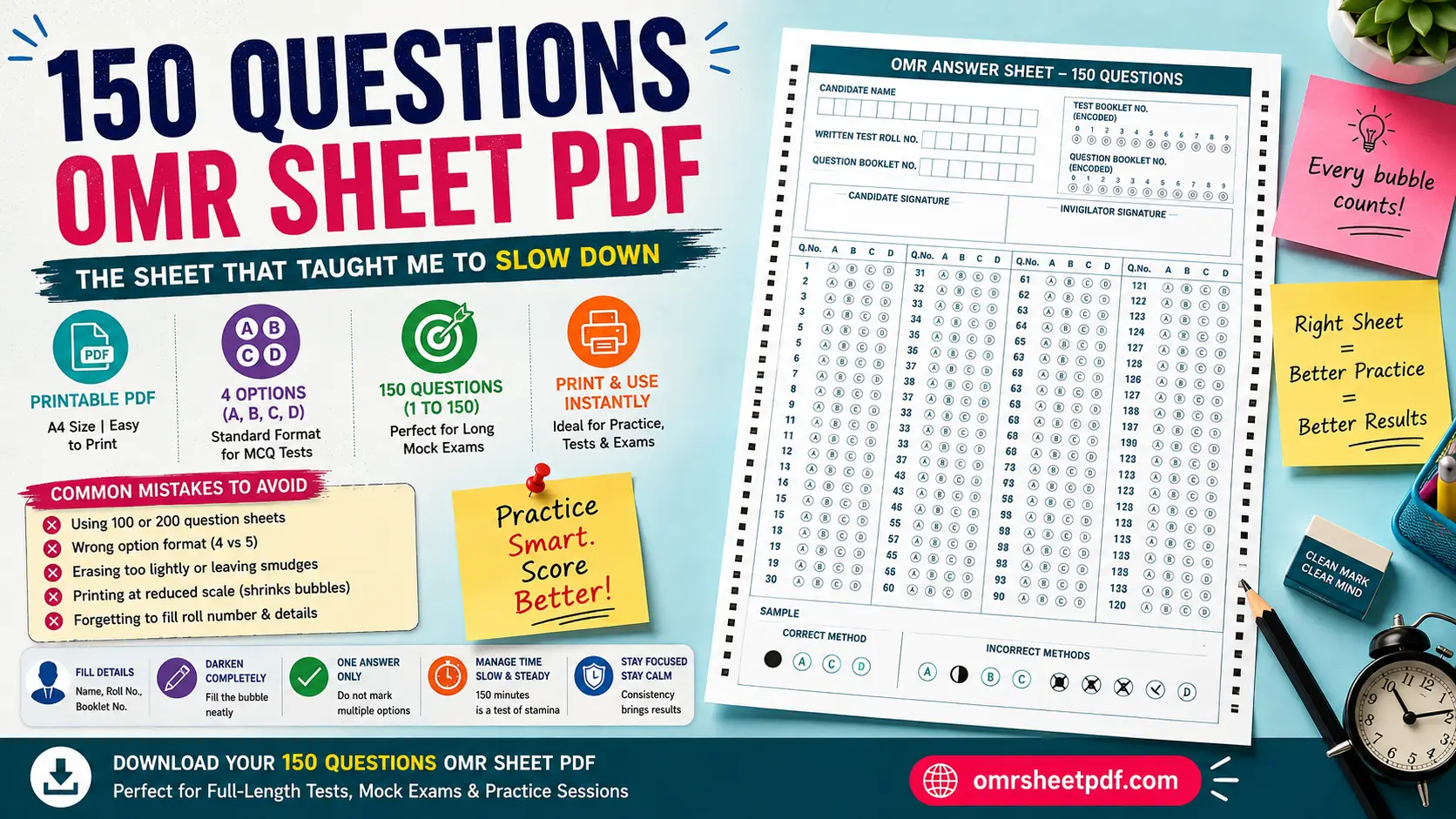
If you are looking for a 150 questions OMR sheet PDF, you are probably gearing up for a longer exam. Maybe it is a full-length entrance test, a teacher eligibility exam, or a serious coaching institute mock paper. I want to walk you through exactly what I wish someone had told me before my first attempt.
Why 150 Questions Feels So Different
A 40 or 50-question test is quick. You barely think about the sheet itself because the exam ends before fatigue sets in. But 150 questions is a different beast entirely, both mentally and physically.
I remember thinking the content was the hard part, and the bubble sheet was just a formality. I was completely wrong. By question 100, my hand grip changed, my pencil pressure got lighter, and my bubbles started looking messier without me even noticing.
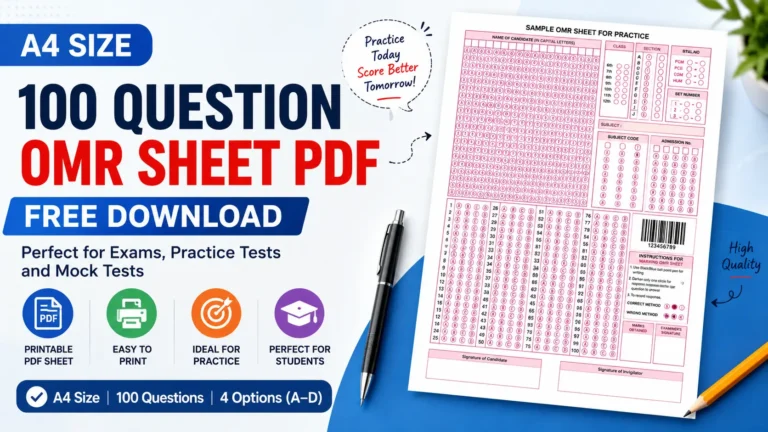
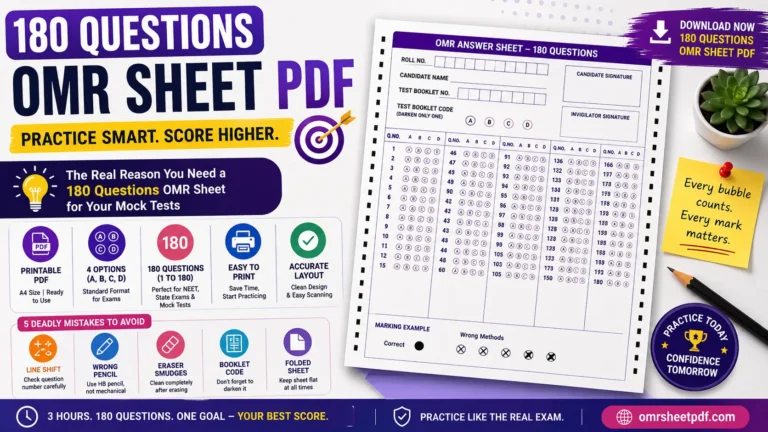
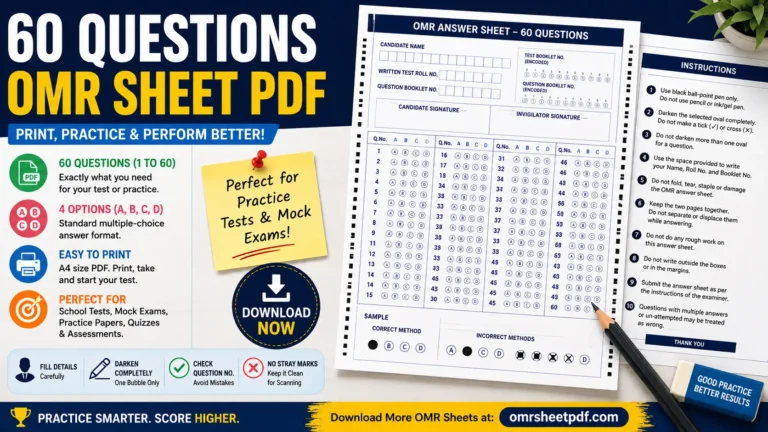
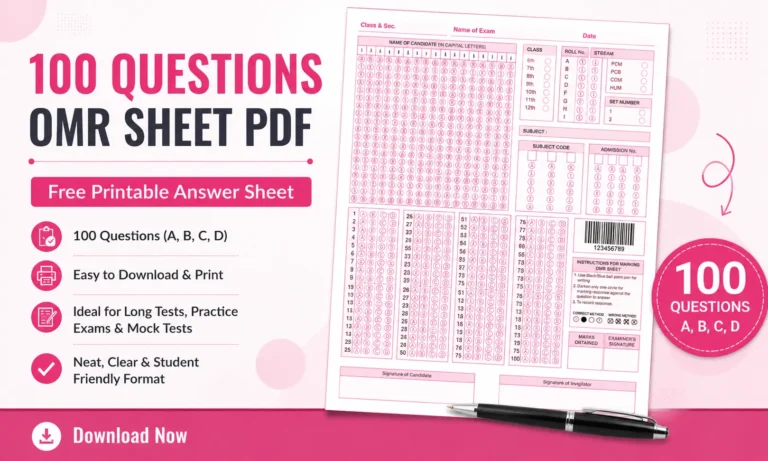
This is exactly why practicing on a proper omr sheet pdf 150 questions template matters so much. It is not just about knowing the answers anymore. It is about training your hand and your focus to survive a longer paper without falling apart near the end.
What to Check Before You Print One
I have downloaded a few bad templates in my early days, so I now check certain things every single time. These small checks save a lot of frustration later during the actual practice session.
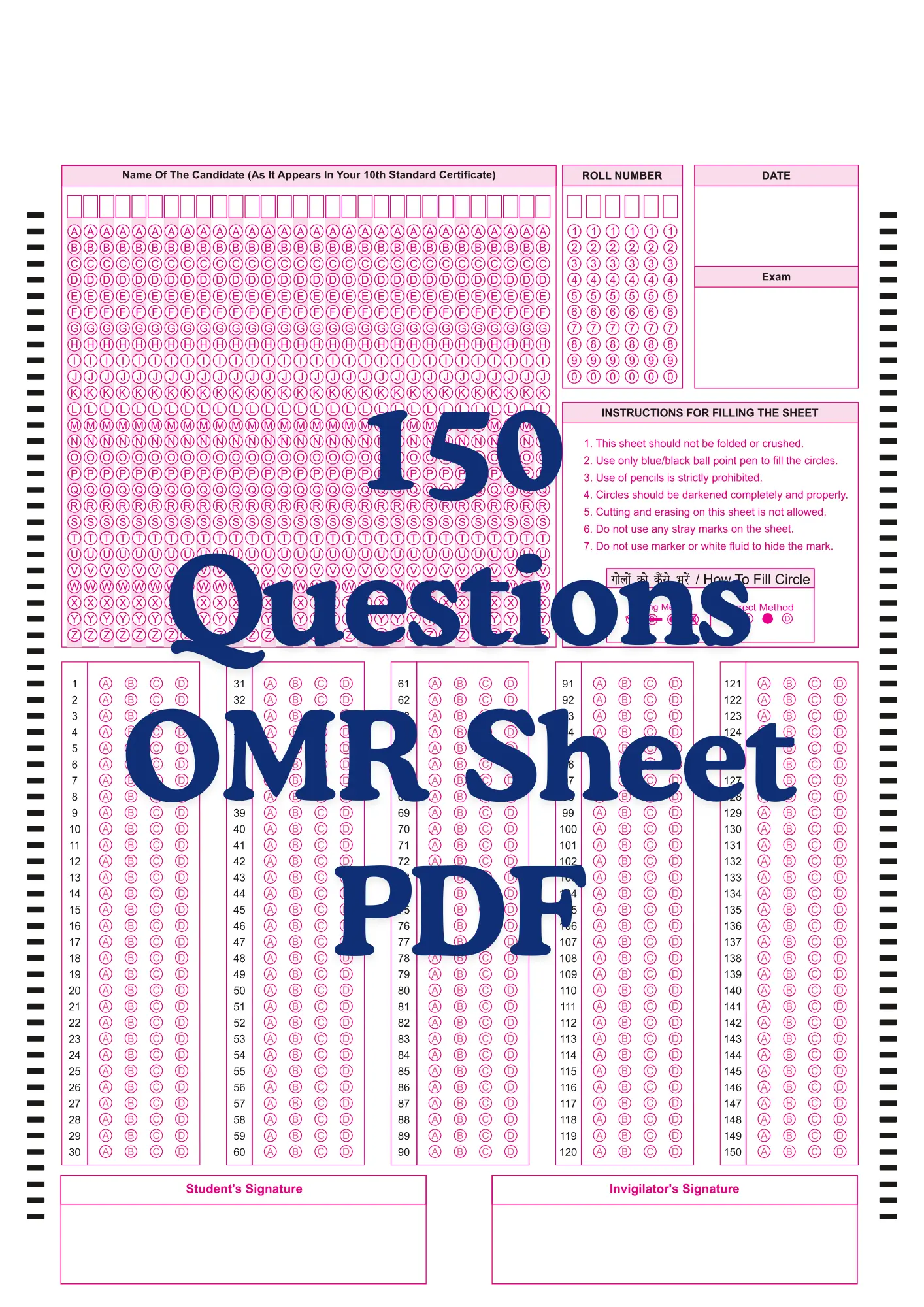
First, confirm the sheet actually has 150 full rows and not 140 or 160 by mistake. I once printed a sheet that quietly stopped at 145 rows, and I only noticed when my last five answers had nowhere to go.
Second, check whether the format matches your real exam, meaning 4-option or 5-option bubbles. A CTET-style paper usually uses 4 options, while some competitive exams with negative marking use different formats entirely. Third, look for a name and roll number block, since this becomes part of your speed training too.
My Step-by-Step Practice Routine
I built this routine after wasting several sheets in the beginning through trial and error. It is simple, but following it consistently made the biggest difference to my actual exam performance.
- I download a fresh omr sheet 150 questions pdf and keep five to six printed copies ready in advance.
- I sit at a proper table, not on my bed, because posture affects how steady my hand stays over two hours.
- I set a strict timer, usually 150 minutes, matching one minute per question as a rough pace guide.
- I fill the name and roll number section first, treating it exactly like a real exam hall moment.
- I solve the question paper separately and mark answers on the OMR sheet every 10 questions, not one by one.
- I take a short 20-second pause around question 75, just to shake out my hand and reset my grip.
- After finishing, I check my sheet against the answer key and write down exactly where I lost time or accuracy.
That small pause around the halfway mark changed everything for me. My bubbles stayed neater in the second half, and I stopped making the sloppy marking mistakes that come from a tired hand.
A Mistake That Cost Me Real Marks
During one mock test, I filled bubble 87 for question 88 because I lost my place while flipping between the question booklet and the sheet. I did not catch it until question 120, which meant over 30 answers were shifted by one row. That single slip turned a good mock score into a disaster, purely from a marking error, not a knowledge gap.
I also once used a 5-option sheet for a test that only had 4 options. I kept accidentally glancing at the fifth bubble column and second-guessing myself for no reason. It sounds small, but it broke my rhythm and slowed me down across the entire paper.
Another time, I erased a wrong answer too quickly and left a grey smudge behind. When I checked it later using a simple OMR scanner app on my phone, that question showed up as an error due to the leftover mark. Cleaning the eraser dust properly after every correction became a permanent habit after that.
Real Examples Where 150-Question Sheets Show Up
I have seen this exact question count used in several state-level teacher recruitment exams and full-length coaching test series. CTET-style practice papers often follow a similar structure, sometimes combined across two sections. If you are preparing for any exam with a long-format paper, this question count is worth practicing specifically, not just generally.
A friend of mine preparing for a state TET exam printed 20 copies of a 150-question sheet and did one every weekend for two months straight. By her actual exam day, she said the sheet felt like second nature, and she finished filling it with ten minutes to spare. That extra time let her go back and double-check five answers she was unsure about.
Common Mistakes to Avoid
These are the mistakes I see most often among students practicing with longer OMR sheets, based on my own experience and what I have noticed helping others.
- Printing at a reduced or “fit to page” scale, which shrinks bubbles and makes them harder to darken accurately.
- Skipping the timer during practice, which means your real exam pace stays a complete guess until exam day.
- Not taking any short break during a long paper, which leads to messier bubbles in the second half.
- Using the wrong option format, either 4 or 5, compared to your actual target exam.
- Folding or bending the printed sheet, which can damage bubble rows if you ever scan it digitally.
Fixing even two or three of these habits makes a noticeable difference within just a few practice attempts.
Printing and Paper Tips
Always print at 100 percent scale and double-check that no bubble rows get cut off near the page edges. I personally use standard A4 paper around 75 GSM, since it holds pencil marks well and does not tear easily during erasing. If you plan on printing a big batch, a local print shop can usually handle 20 to 30 copies cheaply in one go.
Keep your printed sheets flat inside a folder or a hard file, not folded loose inside your bag. A creased sheet is harder to fill neatly, and it can affect scanning accuracy if you use an app to check your answers later.
Final Thoughts
A 150-question OMR sheet is not just a longer version of a shorter test. It tests your stamina, your focus, and your consistency just as much as it tests your subject knowledge. I learned this only after my hand started shaking somewhere past question 130, and I had to slow down and rebuild my pace from scratch.
Print a proper 150 questions OMR sheet PDF, set a real timer, and practice it at least once every week leading up to your exam. Your hand and your focus will both get stronger with every attempt, and that steady confidence is something you will genuinely feel walking into the exam hall.